


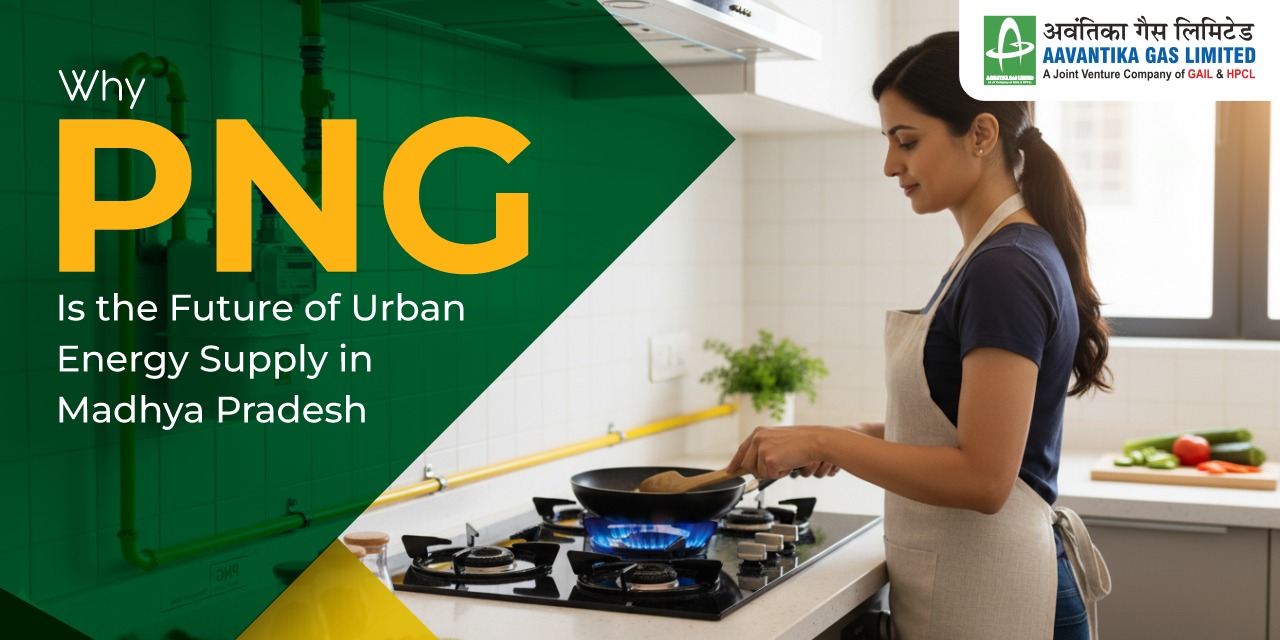
The urban energy landscape in Madhya Pradesh is shifting. As cities expand, households and businesses are looking for reliable, affordable, and cleaner alternatives to traditional fuels. Piped Natural Gas (PNG) meets those needs: delivered directly to kitchens and commercial premises, it removes the hassle of cylinder deliveries, reduces indoor storage risks, and offers stable, metered billing. Beyond convenience, PNG has environmental advantages, lower particulate emissions and reduced greenhouse gases compared with conventional fuels. Municipal planners and private distribution companies have accelerated PNG rollouts in Indore, Bhopal, Gwalior and surrounding industrial hubs, driven by national city-gas distribution policies and growing consumer demand. For urban residents who care about cost predictability, safety, and sustainability, PNG does far more than replace cylinders; it changes how energy is planned, priced, and consumed in Indian cities.
Current rollout and adoption: where Madhya Pradesh stands
Operators in the state have made measurable progress. In the Indore–Ujjain–Gwalior region alone, the authorised distributor reports a six-figure domestic customer base, reflecting strong urban adoption and established network infrastructure. The government’s broader CGD (City Gas Distribution) expansion targets have translated into steady growth of PNG connections across Madhya Pradesh districts, from Bhopal and Rajgarh to Rewa and Satna, with authorisations and pipeline expansions reported regularly in public data. As networks extend, industrial and commercial customers, particularly in industrial clusters such as Pithampur, have also started switching to PNG for process heat and backup applications, attracted by the fuel’s cleaner burn and lower operating costs per unit of energy.
Economic benefits and billing transparency (PNG Bill Indore)
PNG’s cost structure is a major selling point. Users receive monthly bills based on metered consumption, which reduces uncertainty compared to cylinder-based expenses where price and refill logistics fluctuate. For households in cities like Indore, dedicated bill-payment portals and local customer care centres make bill payments simple; consumers can view tariffs, download bills and pay online through the distributor’s site or authorised payment channels. The predictability of PNG billing is attractive to urban households and small businesses managing tight margins. Consumers who monitor consumption using monthly bills often find ways to optimise usage and reduce costs further.
Safety, regulation, and environment
PNG networks follow strict safety standards and routine maintenance protocols. Unlike cylinder handling (which includes transport and manual cylinder switching), piped gas reduces the chance of mishandling and related accidents. Network operators perform pressure tests, install regulators and meters that comply with technical norms, and deploy emergency helplines and rapid response teams for leak complaints. Environmentally, PNG is a lower-emission fuel option: it emits fewer particulates and lower amounts of certain greenhouse gases compared to coal and many liquid fuels, supporting urban air quality goals. These safety and environmental benefits align with municipal plans for cleaner, healthier cities.
Consumer experience and service delivery
From applying for a new connection to paying the PNG Bill in Indore or lodging a complaint, the modern consumer journey is increasingly digital. Distributors provide online portals for applications, bill payments, and grievance redressal; emergency numbers and IVRS systems operate around the clock for urgent safety concerns. Local offices and trained field teams speed up installations and after-sales services, while customer outreach programmes help households understand safe usage, routine maintenance and the benefits of switching from cylinders to PNG. The consumer experience therefore evolves from periodic cylinder management to continuous, service-orientated energy provisioning.
Case in point: urban clusters and industrial demand
Industrial clusters around Indore and Pithampur illustrate PNG’s commercial appeal. Manufacturers and process industries appreciate steady feedstock and lower on-site handling risks. Similarly, urban food service businesses benefit from uninterrupted supply, improving reliability during peak hours. Residential societies, too, have taken to PNG to eliminate cylinder logistics and improve safety for senior residents and families with young children. This mix of commercial and domestic adoption is what makes PNG a comprehensive urban energy solution rather than a niche fuel option.
Further considerations: what the future could look like
Looking ahead, PNG’s role in Madhya Pradesh will likely expand in three linked directions. First, geographical coverage will widen; more neighbourhoods in tier-2 and tier-3 cities will be connected as pipelines extend. Second, integration with cleaner gaseous alternatives (for example, bio-CNG or hydrogen blends) could reduce carbon intensity further. Third, smart metering and digital customer engagement will improve consumption visibility and energy efficiency. Taken together, these developments will turn PNG from a replacement for cylinders into a strategic pillar of urban energy planning, enabling cities to meet public health, environmental and economic objectives simultaneously.
Conclusion
PNG is more than a fuel switch; it is a systems upgrade for urban energy. Through reliable continuous supply, metered billing, strengthened safety practices, and strong policy support, piped natural gas is poised to transform how Madhya Pradesh’s cities power homes and businesses. For residents, the move to PNG simplifies life: fewer deliveries, predictable PNG Bill Indore procedures, clear billing, and dependable service. For planners and industries, PNG offers scale, resilience and lower environmental impact. As networks grow across Indore, Bhopal, Gwalior and beyond, the PNG transition will help build cleaner, safer, and more efficient urban ecosystems for the coming decades. With committed local distributors and ongoing investment, the future of urban energy in Madhya Pradesh looks distinctly piped and prosperous. Aavantika Gas Ltd.
FAQs
Q.How does PNG’s predictable billing help small businesses manage tight margins?
It eliminates high, unexpected bulk costs of cylinders. Metered, monthly bills allow for better budgeting and cost predictability for small businesses.
Q.What major safety risks does piped gas remove compared to cylinders?
PNG removes risks from the manual handling, transportation, and indoor storage of high-pressure cylinders, enhancing overall household safety and reliability.
Q.What strategic benefit does PNG offer to city planners and urban development?
It provides a resilient, scalable energy system that aligns with municipal goals for public health, air quality, and long-term economic stability in the cities.
Q.How could future integration make PNG an even cleaner fuel option?
PNG networks could integrate cleaner gaseous alternatives like bio-CNG or hydrogen blends, which will further reduce the fuel’s carbon intensity over time.
Q.How will smart metering benefit an average PNG customer’s monthly expenses?
Smart metering provides consumption visibility, helping customers optimize usage patterns and improve energy efficiency, ultimately leading to lower monthly PNG bills.

No Comments
Sorry, the comment form is closed at this time.