


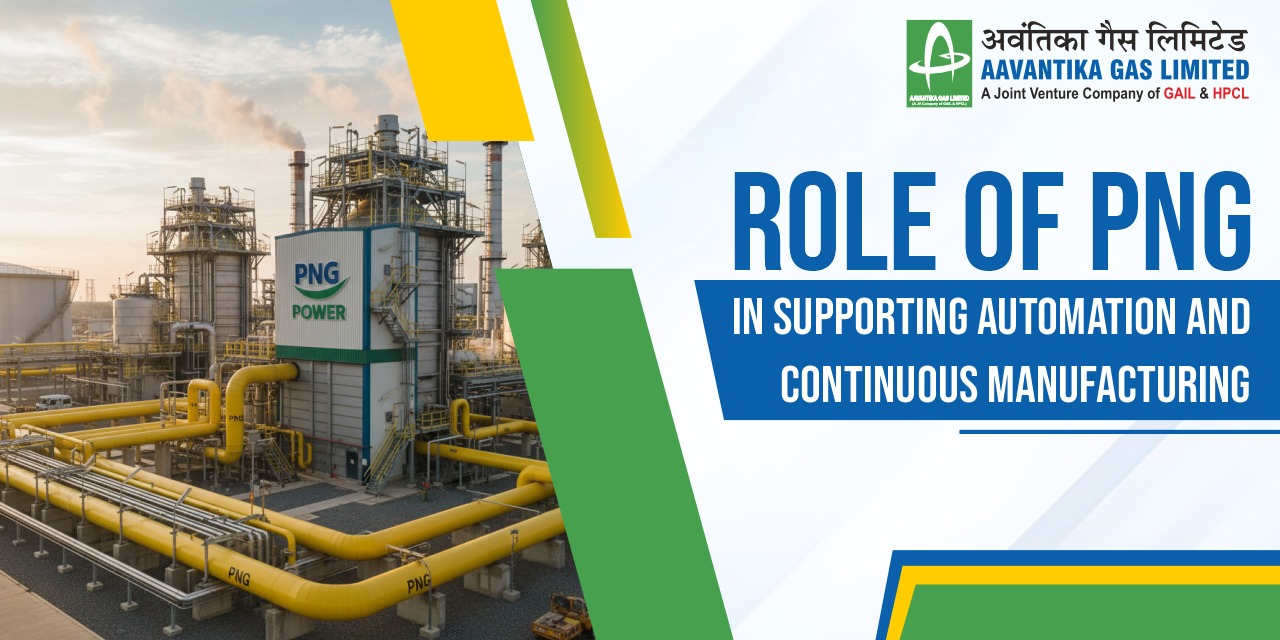
Modern industries are rapidly adopting automation and continuous manufacturing to meet rising production demands while maintaining quality and operational consistency. This transformation depends heavily on a stable and efficient energy source capable of running machinery round the clock. Piped Natural Gas (PNG) has emerged as a key enabler in this context, offering industries a clean, reliable, and cost-effective energy solution that supports automated systems without interruptions. In sectors such as food processing, pharmaceuticals, glass, ceramics, and textiles, where constant energy supply is crucial, PNG plays an instrumental role. Its direct pipeline delivery eliminates the delays and fluctuations associated with conventional fuels like LPG or diesel. By integrating PNG into their processes, industries can maintain steady operations, reduce downtime, and focus on production efficiency. As manufacturing in India continues to evolve, PNG’s role in powering automation and continuous production becomes more vital than ever.
Reliability in Automated Environments
One of the main challenges of automated production lines is maintaining continuous energy input. Machines programmed for high-speed operations cannot afford unpredictable fuel variations. PNG provides industries with a constant and reliable energy source, directly supplied through pipelines that are monitored and maintained by regional gas distribution companies.
In regions like Madhya Pradesh, where industrial clusters are expanding around Indore, Pithampur, and Gwalior, companies adopting PNG report improved efficiency and reduced downtime. The uninterrupted supply enables industries such as automotive components, ceramics, and chemicals to maintain their automation cycles smoothly. This reliability is particularly valuable for continuous manufacturing plants that operate 24 hours a day.
Supporting Process Stability and Quality
Automation in manufacturing relies on sensors and control systems that constantly monitor variables such as temperature, flow rate, and pressure. These systems require fuel with predictable combustion properties to maintain stability. PNG’s composition allows for clean combustion, producing minimal residues and maintaining a consistent heat profile. For industries like food processing or pharmaceuticals, where even minor temperature deviations can affect product integrity, PNG’s uniform heating capability is invaluable. It allows automation systems to regulate thermal processes without frequent recalibrations or manual oversight. The result is improved process repeatability, higher throughput, and better resource utilisation.
Cost Efficiency and Energy Management
The financial aspect of industrial automation often hinges on operational efficiency. PNG provides significant advantages in this area through cost stability and efficient consumption. Unlike traditional fuels that require storage, manual handling, and frequent procurement, PNG arrives directly through the pipeline network. This not only eliminates logistics costs but also provides transparency in billing, as consumption is metered accurately.
Industrial consumers can analyse their PNG usage in real time, aligning energy consumption with production targets. The predictable pricing and availability of PNG allow for better financial planning. In cities such as Indore and Ujjain, industrial users have adopted PNG as part of their broader cost-control strategies.
For facilities with an industrial gas connection, the integration of PNG into automated energy management systems offers an additional edge. Sensors can monitor gas flow and adjust operations accordingly, improving both safety and efficiency.
Environmental and Regulatory Advantages
Sustainability is a key consideration in industrial modernisation, and PNG aligns perfectly with this goal. It emits fewer greenhouse gases and pollutants than coal or furnace oil, helping industries meet environmental standards more easily. Automation technologies can integrate emission monitoring with fuel supply systems, allowing companies to track their carbon output in real time. In states like Madhya Pradesh, regulatory authorities are encouraging industries to switch to cleaner fuels such as PNG. This shift not only supports India’s environmental commitments but also contributes to safer working environments. Cleaner combustion means reduced soot accumulation in boilers and chimneys, lowering the risk of fire hazards and improving indoor air quality for workers.
PNG and Continuous Manufacturing Systems
Continuous manufacturing relies on uninterrupted production cycles where materials flow through equipment without manual intervention. In such setups, fuel interruptions can have cascading effects on output and quality. PNG, with its 24/7 availability and consistent performance, provides the backbone for these operations.
Industries that use high-temperature processes, such as metal fabrication, ceramics, and glass, benefit especially from PNG’s consistent heating value. Automated control systems can rely on steady fuel input to maintain the exact heat required for melting, moulding, or curing. The fuel’s clean characteristics also prevent soot deposition on sensors and heating elements, which could otherwise disrupt automation accuracy.
Digital Integration and Smart Monitoring
As industries move towards Industry 4.0, digital integration between energy systems and automation platforms becomes essential. PNG networks are compatible with modern metering and remote-monitoring solutions. Companies can now access live data on gas consumption, detect anomalies, and optimise operations automatically.
For example, a plant can synchronise its fuel consumption with production data to identify patterns, optimise run cycles, and prevent energy wastage. PNG’s consistent quality and precise measurement enable these digital integrations to function accurately. This transparency also simplifies audit processes and helps maintain operational accountability across departments.
Conclusion
Piped natural gas has become a cornerstone of industrial modernisation, powering automation and continuous manufacturing with reliability, safety, and efficiency. Its uninterrupted supply, clean combustion, and adaptability make it ideal for industries that depend on consistent energy inputs to maintain production quality and operational flow. The adoption of PNG is not merely a shift in fuel type; it represents a step toward a more advanced, connected, and sustainable industrial ecosystem. Facilities with industrial gas connections are already witnessing improvements in cost management, process stability, and environmental compliance. As India’s manufacturing sector grows and automation deepens, PNG will continue to serve as the foundation for uninterrupted productivity and long-term sustainability. With Aavantika Gas Ltd., industries gain a dependable partner committed to supporting progress through safe, efficient, and future-ready energy solutions.
FAQs
- How does PNG’s clean combustion protect sensors in automated systems?
It prevents soot and residue buildup on sensors and heating elements, ensuring the continuous accuracy of automated thermal monitoring systems.
- What major production issue is eliminated by PNG in continuous manufacturing?
The 24/7 uninterrupted PNG supply prevents cascading failures and material flow disruption, which are critical for continuous, high-volume operations.
- What operational cost is eliminated compared to storing and handling other fuels?
PNG eliminates logistics costs, storage, and manual handling. Consumption is accurately metered and delivered directly through the pipeline network.
- How does PNG integration with Industry 4.0 simplify regulatory compliance and auditing?
It enables live data access and smart monitoring of gas consumption, simplifying regulatory audits and improving operational and environmental accountability.
- What benefit does PNG’s uniform heat profile offer for process stability?
Its consistent composition allows automated systems to maintain precise temperature control, preventing deviations that could compromise sensitive product quality.

No Comments
Sorry, the comment form is closed at this time.