



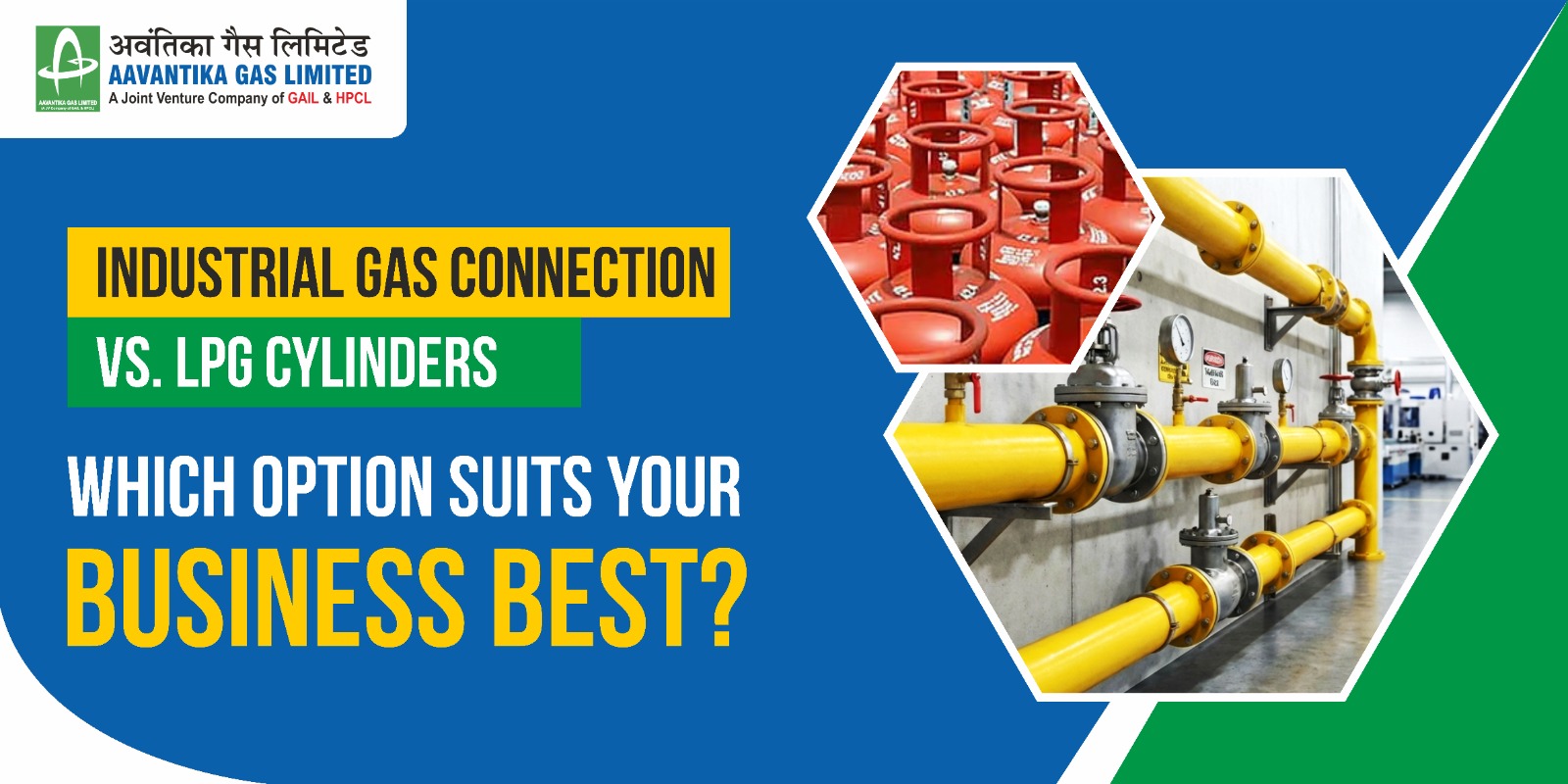
Industrial businesses rely on a consistent fuel supply to keep operations running without disruption. From manufacturing units and food processing plants to commercial kitchens and workshops, energy availability directly influences productivity and cost control. Traditionally, LPG cylinders have been widely used across industries due to their easy availability. However, with the expansion of city gas distribution networks, many businesses are now evaluating piped industrial PNG connections as an alternative. Choosing the right fuel system is not just a technical decision; it affects daily operations, safety practices, space management, and long-term planning. Understanding how industrial PNG connections compare with LPG cylinders helps business owners select a solution that fits their operational scale and usage needs.
Understanding Industrial PNG Gas Connections
An industrial PNG gas connection supplies natural gas directly to business premises through an underground pipeline network. The supply is regulated and metered, allowing continuous fuel flow without the need for manual handling 24×7. This system is particularly useful for industries that operate long hours or run production processes that cannot afford downtime.
Billing for industrial gas is based on actual consumption as per meter installed, which allows businesses to track fuel usage accurately. This transparency supports better expense planning, especially for medium and large units with predictable energy requirements. In areas with established infrastructure, industrial PNG connections have become a dependable fuel option.
Role of LPG Cylinders in Industrial Operations
LPG cylinders have long supported industrial and commercial operations due to their flexibility. They do not depend on pipeline availability and can be supplied to locations outside city gas coverage. For small-scale units, temporary setups, or businesses in remote areas, LPG cylinders continue to serve as a practical solution. Cylinders are available in various sizes, allowing businesses to choose capacity based on consumption. However, managing multiple cylinders involves storage space, handling procedures, and timely replacing. These factors add logistical responsibility, especially for operations with continuous fuel needs.
Supply Reliability and Production Continuity – LPG vs PNG
Supply reliability plays a key role in fuel selection. Industrial PNG connections provide uninterrupted gas flow as long as the network is active. There is no need to pause operations for cylinder replacement or worry about sudden fuel shortages during peak hours. LPG cylinders require careful monitoring. Businesses must keep track of cylinder levels and maintain sufficient stock to avoid disruptions. Any delay in replacing can impact production schedules. For industries with continuous processes, this dependence on refills can become a limitation. PNG is much more convenient for industrial uses.
Cost Structure and Expense Planning
Cost comparison between industrial PNG connections and LPG cylinders depends largely on usage volume. LPG cylinders involve fixed replacing prices that may change over time. Handling, storage, and transportation also add indirect costs.
Industrial PNG connections usually involve an initial installation cost, followed by monthly billing based on actual usage. For high-consumption businesses, this structure often results in better cost predictability. In industrial zones offering an industrial PNG gas connection in Indore, many units find that piped gas becomes more economical as consumption increases. PNG is cost-efficient as compared to LPG.
Space and Storage Requirements
Industrial facilities often operate within limited floor space. LPG cylinders require designated storage areas that comply with safety regulations. This space could otherwise be used for production, raw material storage, or movement. An industrial PNG connection removes the need for on-site cylinder storage. Gas is supplied directly through pipelines, allowing better space utilisation and cleaner layouts. For businesses aiming to optimise their operational area, this is a practical advantage.
Safety Considerations in Industrial Settings
Safety is critical in industrial environments. LPG cylinders involve manual handling and storage, which require strict adherence to safety practices. Improper handling can increase operational risk specially in the case of high volume users.
Industrial PNG connections reduce the need for manual fuel handling. Regulated pressure supply, monitoring systems, and periodic inspections support controlled usage. This structured approach aligns well with organised safety management systems commonly followed by medium and large industries.
Scalability and Future Business Growth
As businesses expand, fuel demand often increases. With LPG systems, higher consumption means storing more cylinders, which adds complexity and space requirements. Industrial PNG connections are more adaptable to growth. Increased demand can often be managed within the existing pipeline framework, subject to capacity planning. This scalability supports businesses planning long-term expansion or higher production volumes, particularly in industrial hubs.
Choosing the Right Option for Your Business
The decision between an industrial PNG connection and LPG cylinders depends on several factors, including consumption consistency, operating hours, safety priorities, available space, and future plans. Small or remote businesses may continue with LPG due to flexibility, while larger operations with stable demand often benefit from piped gas.
For units operating in organised industrial areas and considering an industrial gas connection in Indore, piped gas often supports smoother operations and better long-term planning.
Conclusion
Selecting the right fuel system is essential for efficient industrial operations. LPG cylinders offer accessibility and flexibility, while industrial PNG connections provide continuous supply, predictable costs, and organised energy management. For businesses with steady or high fuel consumption, piped gas often supports operational stability and future growth. Evaluating present needs along with expansion plans helps businesses make informed choices. As industrial infrastructure continues to grow, reliable providers such as Aavantika Gas Ltd. play an important role in supporting industries with dependable gas solutions suited to evolving business requirements.
FAQs
Can PNG fulfill all industrial requirements like LPG ?
Yes, PNG meets all types of industrial needs by providing consistent, safe, and efficient heat, effectively replacing LPG in manufacturing.
How does the “dispersive nature” of piped gas improve indoor industrial safety?
Natural gas is lighter than air and dissipates quickly if leaked, whereas LPG is heavier and pools on the floor, creating a higher explosion risk.
Do industrial gas connections require different burners than LPG systems?
Yes, because piped gas has different combustion properties, businesses must typically recalibrate or replace burner nozzles when switching.
Can piped gas connections be affected by external municipal issues?
Supply may be interrupted while rare, supply can be interrupted by third-party pipeline damage.
Why is piped gas often considered “greener” for large-scale manufacturing?
Piped natural gas produces fewer carbon emissions per unit of energy and eliminates the carbon footprint associated with the transport and delivery of heavy cylinders.

No Comments
Sorry, the comment form is closed at this time.